If you're looking for a white noise machine for your baby, you're on the right track. That quiet nursery you worked so hard to create might actually be too quiet for your newborn.
Babies spent nine months hearing the constant whoosh of blood flow in the womb. Complete silence can feel strange and unsettling to them.
This guide covers why white noise works, how to use it safely, and what features matter most when choosing a machine for your nursery.
Quick Answer: Are White Noise Machines Safe for Babies?
Yes, white noise can help babies sleep by masking sudden household sounds. To use it safely, keep it at or below 50 dB at crib level and place the machine at least 7 feet (2 metres) from the crib.
This guidance is based on a 2014 study in Pediatrics (Hugh et al.) and is endorsed by the American Academy of Pediatrics (AAP).
At appropriate volumes and distances, white noise machines are considered safe for newborns and older babies.
Where Does the Name "White Noise" Come From?
The name comes from an analogy with white light.
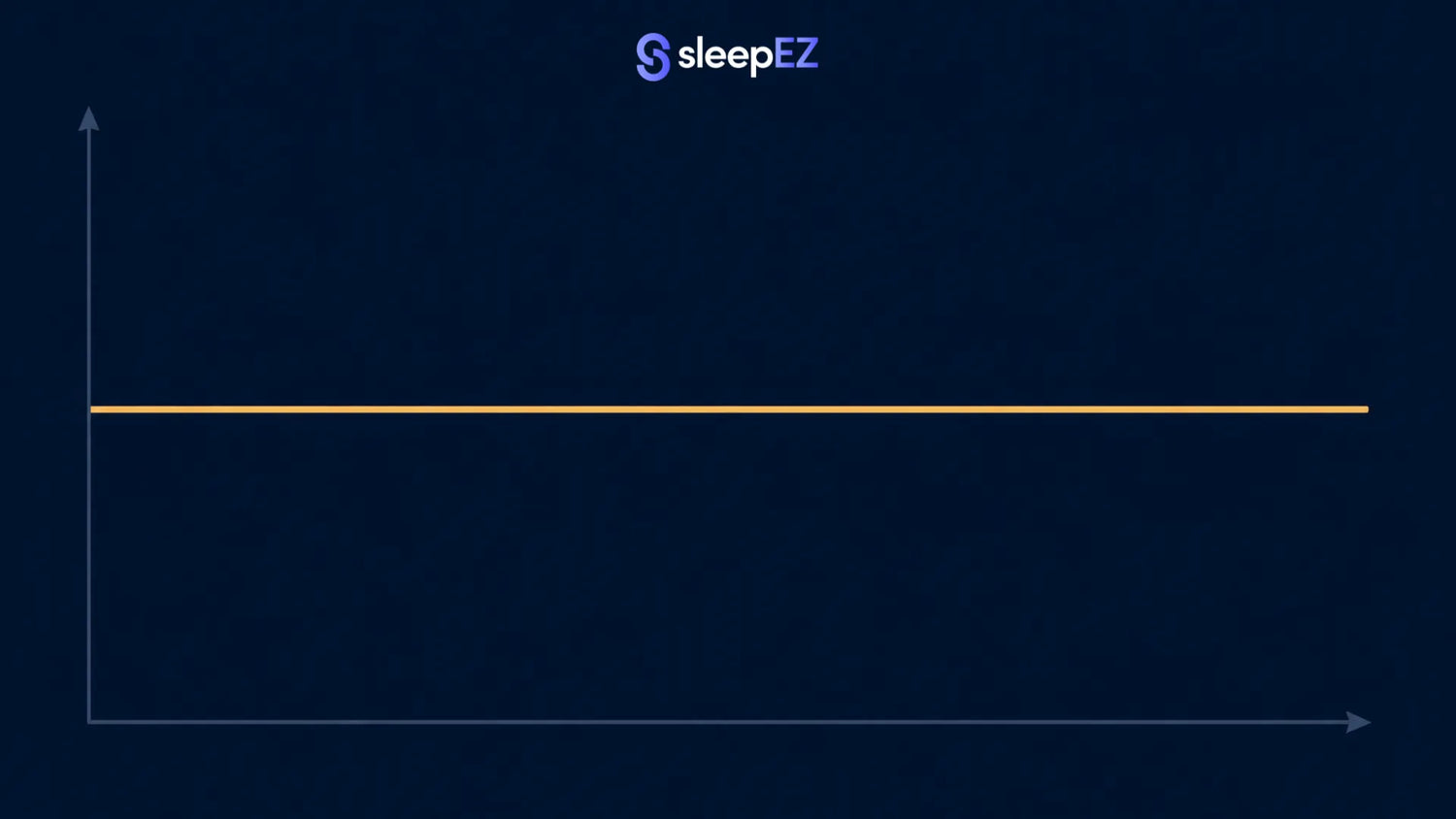
White light contains all visible wavelengths of light at equal intensity, which is why a prism splits it into the full colour spectrum. White noise works the same way with sound: it contains all audible frequencies (roughly 20 Hz to 20,000 Hz) at equal intensity, producing a flat, featureless sound rather than a tone or melody.
This naming convention extends to other "colour" noises: pink noise has more energy in lower frequencies (softer, like rain), and brown noise has even more low-frequency energy (deeper, like distant thunder).
How Does White Noise Work?
White noise doesn't block sound, it masks it.
Your brain is wired to notice changes in sound, not steady background levels. A door slamming at 60 dB will wake you from sleep; a fan running at 60 dB all night won't.
White noise works by raising the baseline sound level in your environment, which reduces the relative contrast of sudden sounds, making them less likely to trigger waking.
The mechanism in one sentence: White noise doesn't silence your environment; it makes sudden sounds less detectable against a consistent background.
Why Babies Sleep Better With White Noise
The Womb Connection
The womb is not a quiet place. Babies spend nine months surrounded by constant sound, blood flow, digestion, the mother's heartbeat, and muffled external sounds, at approximately 50 dB.
Silence is actually unfamiliar to newborns. Pink noise mimics the constant sounds babies heard in the womb.
White noise serves the same function, a familiar, constant background that signals safety.
The Startle Reflex
Newborns have a strong Moro reflex (startle reflex), a sudden movement triggered by unexpected sounds. This reflex can wake a sleeping baby from a door closing, a dog barking, or a sibling playing.
White noise masks sudden noises like doorbells, barking dogs, or older siblings playing, helping babies develop better sleep patterns and stay asleep longer.
Linking Sleep Cycles
Babies cycle through sleep stages approximately every 45 minutes. At the end of each cycle, they briefly surface toward wakefulness.
In a quiet room, any small sound at this moment can fully wake them. White noise creates a consistent background that helps babies transition back to sleep without fully waking between cycles.
How It Blocks Out Distracting Noises
White noise masks sudden household sounds that can startle babies awake. Doorbells, barking dogs, older siblings playing, or creaking floors won't wake your baby when white noise is running.
The steady sound creates a protective sound barrier around their sleep space.
What Does the Research Say?
The safety guidance for baby white noise machines comes primarily from one landmark study, and it's worth knowing what it actually found.
Hugh et al., Pediatrics, 2014 (133(4):677–681)
Researchers tested 14 commercially available infant sound machines at three distances: 30 cm (12 inches), 100 cm (3 feet), and 200 cm (6.5 feet) from the crib.
Key findings:
- All 14 machines exceeded 50 dBA when placed at 30 cm, the recommended safe limit for infant hospital nurseries
- Three machines produced over 85 dBA at maximum volume, a level that risks noise-induced hearing loss with prolonged exposure
- At 200 cm (6.5 feet), most machines fell within or near the safe range at moderate volume settings
The resulting consensus: Keep white noise at or below 50 dB at crib level, place the machine at least 7 feet away, and avoid maximum volume settings.
This guidance is now echoed by the AAP, ASHA (American Speech-Language-Hearing Association), and every major paediatric sleep authority.
The reassuring part: At the right volume and distance, white noise is safe. The study didn't find that white noise is harmful, it found that improper use (too loud, too close) is harmful. Follow the guidelines and the risk is negligible.
Safe Volume and Distance: The Numbers That Matter
These are the two most important numbers for safe baby white noise use:
50 dB at crib level.
Not at the machine, at the crib. A machine set to 65 dB at 30 cm may measure 50 dB at 2 metres. Distance matters as much as the volume dial.
7 feet (2 metres) minimum from the crib.
Place the machine on a dresser, shelf, or nightstand across the room, not on the crib rail, inside the crib, or on the floor directly beside it.
How to check: Download a free decibel meter app (Decibel X on iOS; Sound Meter on Android). Place your phone at crib mattress level, not next to the machine, and check the reading. Aim for 45–50 dB.
The "all-night" question: Continuous overnight use is safe at appropriate volume and distance. The safety concern isn't duration, it's volume. A machine running at 45 dB all night is safer than one running at 70 dB for 30 minutes.
See our full guide: How Loud Is Too Loud for a Baby Sound Machine?
How Loud Should White Noise Be?
The recommended safe volume for white noise is below 50 dB at the listener's position, whether that's your pillow or a baby's crib mattress.
Real-world reference points:
- 30 dB, whisper
- 40 dB, quiet library
- 50 dB, recommended maximum (quiet office, soft rainfall)
- 60 dB, normal conversation (too loud for overnight sleep)
How to check: Download a free decibel meter app (Decibel X or NIOSH Sound Level Meter on iOS; Sound Meter on Android). Place your phone at pillow level, not next to the machine, and check the reading.
For babies, the machine should also be placed at least 2 metres (6–7 feet) from the crib. See our full guide: How Loud Is Too Loud for a Baby Sound Machine?
White Noise vs Pink Noise vs Brown Noise for Babies
| Noise Type | Sounds Like | Best For | Baby-Friendly? |
|---|---|---|---|
| White Noise | Fan, static | Masking sudden loud sounds | ✅ Yes |
| Pink Noise | Steady rain, wind | Soothing, womb-like | ✅ Yes, often preferred |
| Brown Noise | Deep rumble | Deep relaxation | ✅ Yes, try if others don't work |
| Womb sounds | Heartbeat, swooshing | Newborns especially | ✅ Yes |
| Lullabies | Gentle melody | Toddlers | ✅ Yes |
For babies and infants, womb sounds are particularly effective in recreating the calming environment of the womb. For toddlers, shushing sounds and lullabies promote relaxation.
For older kids, pink and brown noise or soothing nature sounds create a peaceful sleep environment.
See our full comparison: White Noise vs Pink Noise for Babies.
Is a White Noise Machine Good for Babies?
Yes, when used correctly, white noise machines offer several benefits for baby sleep.
Longer, More Restful Sleep: White noise helps babies fall asleep faster and stay asleep longer. It helps them connect sleep cycles, which means longer naps and better nighttime sleep for everyone.
Creates a Powerful Sleep Cue: Using white noise consistently signals to your baby that it's time for sleep. After a few weeks, turning on the machine becomes part of a reliable bedtime routine that makes settling down easier.
A Lifesaver for Light Sleepers: Some babies wake up at every little sound. White noise is especially helpful for these sensitive sleepers who need extra sound protection to stay asleep.
8 Features to Look for in a Baby White Noise Machine
1. Volume Control With Safe Range
The most important safety feature. Look for precise, adjustable volume that can be set below 50 dB at crib level. Avoid machines that only offer "low/medium/high" without granular control.
2. Continuous Play Mode
The machine should loop continuously without stopping or changing volume. A machine that turns off after 30 minutes defeats the purpose of masking sounds through the night.
3. Multiple Sound Options
Hush offers 34 soothing sounds, combined with 9 adjustable light settings, providing the ideal sleep environment every night. White, pink, and brown noise at minimum, different babies respond differently.
4. App Control
Hush comes with an app for easy control, so you can adjust volume and settings from another room without entering the nursery and risking waking your baby.
5. Night Light
A soft, dimmable night light is useful for nighttime feeds and nappy changes without fully waking the baby. A soothing red light glow supports natural sleep and melatonin production.
6. Rechargeable Battery
A battery life of 8+ hours ensures it's reliable for all-night use. Essential for travel and naps in different rooms.
7. Travel-Friendly Design
A compact, portable machine maintains sleep consistency in hotel rooms, grandparents' houses, and holiday accommodation.
8. Safe Physical Design
Cords should be kept out of reach. A stable base prevents tipping. The machine should be designed to sit safely on a dresser or shelf at the recommended distance.
Our Top Recommendation for Parents
The Hush Sound Machine for Babies was created with all these essential features in mind. It offers a variety of sounds, runs continuously, includes a calming night light, and is fully portable and rechargeable, making it the ideal choice for modern parents.
White Noise Machine Features Comparison
| Feature | Why It Matters for Babies |
|---|---|
| Volume control | Keeps sound at safe 50 dB limit |
| Continuous play | Prevents sudden silence from waking baby |
| Multiple noise colours | Different babies respond to different sounds |
| App control | Adjust without entering nursery |
| Night light | Nighttime feeds without full waking |
| 8+ hour battery | Reliable all-night use |
| Portable design | Consistent sleep environment when travelling |
| Stable base | Safety, prevents tipping, cords out of reach |
Can Babies Become Dependent on White Noise?
This is one of the most common concerns, and it's worth addressing honestly.
All babies develop sleep associations, objects, sounds, or conditions they associate with sleep. A dummy, a specific blanket, a parent's presence, or white noise are all sleep associations.
White noise is simply one of them.
A sound machine isn't required, it's just a tool. If your baby sleeps soundly without one, don't add it. But if you're dealing with night wakings, outside noise, or frequent startles, it can help significantly.
When to think about weaning: There's no medical reason to stop white noise at a specific age. Many children use it safely into toddlerhood.
If you want to wean, a gradual volume reduction over 2–4 weeks is the most effective approach. See our full guide: When Should You Stop Using White Noise for Your Baby?
Choosing a Safe Baby White Noise Machine
The safety criteria from the Hugh et al. Pediatrics study translate directly into what to look for when buying:
Volume control that goes low enough. Many machines are too loud at their minimum setting. Look for a machine that can comfortably run at 45–50 dB at 2 metres, not just at 30 cm.
Reliable continuous play. A machine that cuts out at 3am defeats the purpose. Look for confirmed all-night battery life.
App control. Being able to reduce volume from your phone without entering the nursery is a genuine safety advantage, you can respond to the research guidance without risking waking your baby.
The Hush Light & Sound Machine offers 34+ soothing sounds, 9 adjustable light settings, app control, and a battery life of 8+ hours, designed specifically for nurseries with the safety and reliability features that matter for infant sleep.
The Do's and Don'ts of Using White Noise in the Nursery
DO place the machine across the room from the crib, at least 7 feet away.
DON'T place it inside the crib or attached to the crib railing.
DO keep the volume at a moderate level, around 50 decibels (the level of a quiet conversation).
DON'T blast it at full volume. Too loud can damage hearing.
DO place the machine on a stable surface where it won't fall or tip over.
DON'T use machines with power cords that could pose strangulation risks - choose cordless options.
DO regularly check that the machine is functioning properly and hasn't been damaged.
DON'T use machines with small, detachable parts that could pose choking hazards.
Frequently Asked Questions
What is white noise?
White noise is a sound containing all audible frequencies at equal intensity, producing a steady, featureless "shhh" similar to static or a running fan. The name comes from an analogy with white light, which contains all visible wavelengths.
Does white noise help you sleep?
It may, particularly if noise is your main sleep disruptor. White noise masks sudden sounds that cause waking.
Research shows benefit in noisy environments, though evidence in quiet environments is less consistent.
Is white noise safe?
Yes, at appropriate volumes. Keep white noise below 50 dB at ear level for adults and below 50 dB at crib level for babies, placed at least 2 metres away.
At safe volumes, extended overnight use is generally considered safe.
What's the difference between white noise, pink noise, and brown noise?
White noise has equal energy across all frequencies (sounds like static). Pink noise has more energy in lower frequencies (sounds like rain).
Brown noise has even more low-frequency energy (sounds like deep rumble). Pink and brown tend to feel softer and more natural for sleep.
Can white noise be harmful?
At excessive volumes (70+ dB) or placed too close to the listener, white noise can affect hearing over time. At the recommended 50 dB or below, at appropriate distance, it's generally considered safe for adults and babies.
Is white noise better than silence for sleep?
For people in noisy environments, yes, white noise masks disruptive sounds that silence cannot. For people in already-quiet environments, the benefit is less clear.
Personal preference matters.
Does white noise help babies sleep?
Research suggests it can help babies fall asleep faster and wake less from sudden sounds. It may also reduce the startle reflex in newborns.
See our full guide: White Noise Machine for Baby.
What is the best white noise machine?
Look for adjustable volume, continuous play mode, multiple sound options (white, pink, brown), and a compact design. The Hush Sound Machine is designed specifically for sleep environments.
Better Sleep for Your Baby, More Rest for You
A white noise machine is a safe, effective, and affordable tool for improving your baby's sleep. It works with your baby's natural biology and helps create the calm environment they need to rest well.
Better baby sleep means more rest for you too. When your baby sleeps longer and more soundly, everyone in the family benefits.
Ready to bring better sleep to your nursery? See why the Hush Sound Machine for Babies is the top choice for parents.

Leave a comment
This site is protected by hCaptcha and the hCaptcha Privacy Policy and Terms of Service apply.