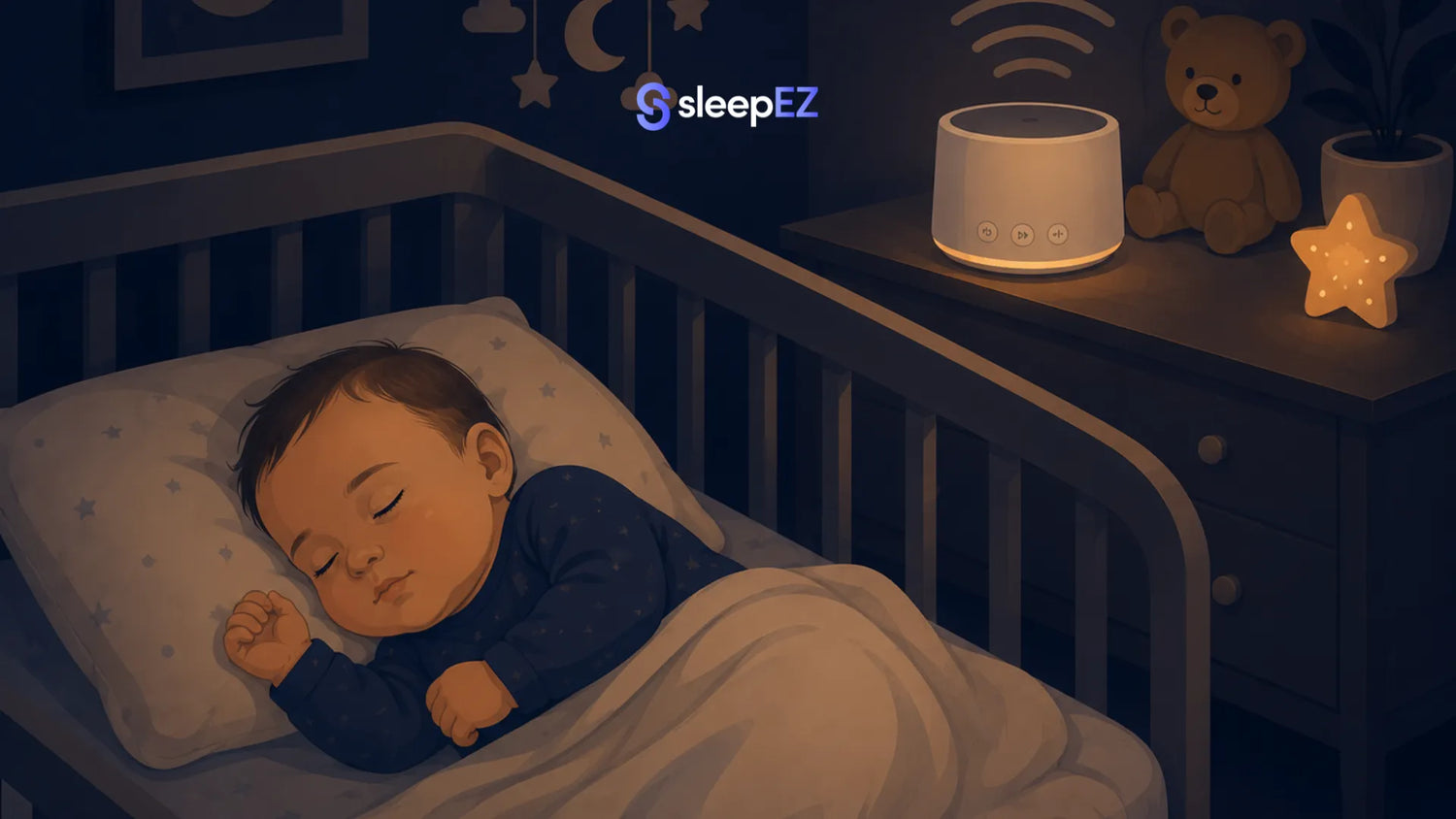
Your baby sleeps beautifully with white noise. But now you're wondering: should they still be using it?
There's no strict cutoff age. White noise is safe long-term when used correctly. Many toddlers still benefit from it.
This guide explains when you may want to wean and exactly how to do it gently.
Quick Answer: When Should You Stop Using White Noise?
There is no specific age when babies must stop using white noise. Many children continue using white noise safely into toddlerhood and beyond, and some adults use it their entire lives.
The short answer: If your child sleeps well with white noise and it's used at safe volumes (below 50 dB at crib level), there is usually no need to stop unless your family wants to.
When parents typically consider weaning:
- When their child can sleep independently in other environments without it
- When they want to simplify travel or overnight stays
- When their child shows signs of being ready for quieter sleep
- When it's a personal preference rather than a necessity
Why Do Babies Sleep Better With White Noise?
Understanding why white noise works helps parents make informed decisions about when, or whether, to stop.
It resembles the womb environment.
The womb is not silent. Babies are surrounded by the constant sounds of blood flow, digestion, and the mother's heartbeat, approximately 50 dB of continuous sound.
White noise mimics this familiar environment.
It masks sudden household sounds.
Babies have a strong startle reflex (Moro reflex) that can wake them from light sleep. White noise creates a consistent background that prevents sudden sounds, a door closing, a dog barking, a sibling playing, from triggering this reflex.
It helps link sleep cycles.
Babies naturally wake between sleep cycles (approximately every 45 minutes). White noise creates a consistent environment that helps them transition back to sleep without fully waking.
It reduces overstimulation.
For newborns especially, the sensory world is overwhelming. White noise provides a simple, consistent stimulus that can be calming.
Is There a Right Age to Stop Using White Noise?
There's no medically required age to stop. White noise can be used safely into toddlerhood as long as it stays below 50 decibels and sits at a safe distance.
Sleep experts see typical patterns:
- 0-12 months: Very beneficial for sleep
- 12-24 months: Optional but still helpful
- 2-3 years: Many parents begin weaning
- 3+ years: Most kids can sleep without it, but it's still safe if they enjoy it
Think of white noise like a comfort tool. You can stop when your child no longer needs it, not when a rule says so.
Do Babies Need to Stop Using White Noise?
No, not unless you want to.
There is no medical or developmental evidence that continuing to use white noise beyond infancy causes harm. The concern that babies will become "dependent" on white noise is understandable, but it's worth examining:
All children have sleep associations.
Whether it's a dummy, a specific blanket, a parent's presence, or white noise, all children develop associations with sleep. White noise is simply one of the more practical ones because it's consistent, controllable, and doesn't require parental involvement.
White noise is not a crutch.
It's a tool. Adults who use white noise machines, fans, or earplugs every night aren't considered to have a problem, they've simply found what works for their sleep.
The real question isn't "should I stop?" but "does it still serve us?"
If white noise is helping your child sleep well and isn't causing any problems, there's no compelling reason to remove it.
At What Age Do Most Children Stop Using White Noise?
There's no universal answer, but here's what's typical:
| Age | Typical White Noise Usage |
|---|---|
| 0–12 months | Highly beneficial, strongly recommended by many sleep consultants |
| 12–24 months | Very common, most families continue without issues |
| 2–3 years | Many families begin weaning if they want to |
| 3–5 years | Some children continue; others have naturally transitioned away |
| 5+ years | Still safe and effective if helpful, some children and adults use it indefinitely |
The "right" age to stop is when it works for your family, not when a chart says so.
Is It Bad to Keep Using White Noise?
No. White noise is not harmful when used at safe volumes and distances.
The key safety guidelines remain the same regardless of age:
- Keep volume below 50 dB at the child's sleeping position
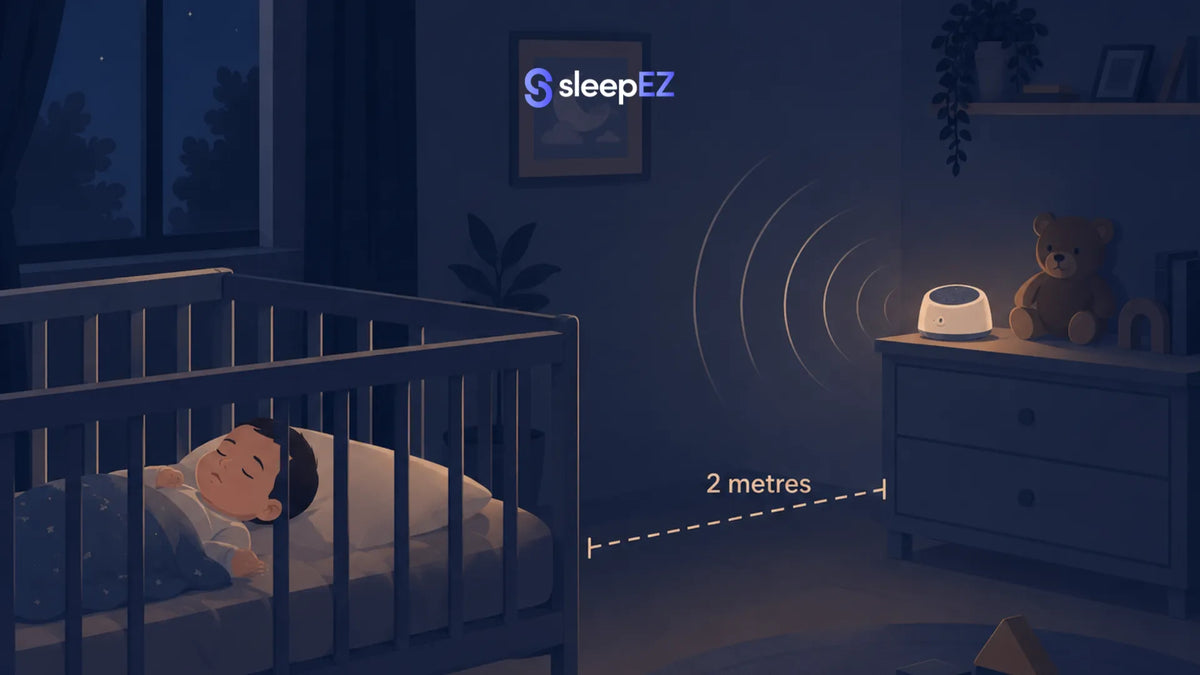
- Place the sound machine at least 2 metres from the bed or crib
- Use continuous, consistent sound rather than music with variable volume
Many adults use white noise every night of their lives. There is no evidence that long-term use causes hearing damage, developmental issues, or dependency problems when used safely.
Reasons Parents Choose to Continue White Noise
Many families find that continuing white noise well into toddlerhood and beyond simply works for them:
- Noisy household, siblings, pets, street noise, apartment living
- Light sleeper child, some children are naturally more sensitive to sound
- Travel, white noise creates a consistent sleep environment in unfamiliar places
- Daycare schedules, nap times at different hours are easier with white noise support
- Parental sanity, a child who sleeps well is a gift worth maintaining
- It's working, if it isn't broken, there's no need to fix it
Reasons Parents Decide to Stop White Noise
There are also perfectly valid reasons to wean:
- Your child no longer seems to need it, they sleep well without it in other environments
- You want to simplify overnight stays at grandparents' or in hotels
- Your child is requesting a quieter room
- You're moving to a new bedroom or sleep arrangement
- You want to reduce the number of sleep associations before starting school
- Personal preference, you simply prefer a quieter household
None of these reasons is more valid than the others. The decision is entirely yours.
Common Myths About White Noise
Myth: White Noise Causes Hearing Damage
White noise is safe when used at proper volumes. Keep it below 50-60 decibels and place it at least 7 feet away from your baby.
Research shows white noise helps 80% of babies fall asleep within 5 minutes. The American Academy of Pediatrics recommends it to improve baby sleep.
Dr. Blake Papsin, chief ear specialist at The Hospital for Sick Children in Toronto, says machines are safe when not used "too loud or too close or too long."
Myth: Babies Become Dependent on White Noise
Dr. Harvey Karp, founder of Happiest Baby, explains: "There's no need to fear white noise might make your baby addicted to sound for sleep. Think of white noise as just a sleep support, no more of a problem than an adult nightly reliance on using a pillow and warm blanket."
Your baby won't need therapy to break free from white noise. It's simply a helpful sleep cue.
Read: White Noise Machine Baby
Signs Your Child May Be Ready to Wean Off White Noise
Watch for these signals:
- They fall asleep easily without it during naps
- They seem distracted by the machine
- They ask to turn it off
- Sleep environment is already quiet
- They're moving to a big-kid bed
If your child still falls asleep faster with white noise, there's no rush to stop.
Why Some Parents Choose to Wean
Parents have different reasons for stopping white noise:
- Child seems dependent on it
- Want to simplify bedtime routine
- Traveling without a machine is easier
- Child seems overstimulated by sound
- Toddler begins playing with the machine
None of these reasons are urgent. Choose what feels right for your family.
Choosing the Right Sound Machine Makes Weaning Easier
If you do decide to wean, a sound machine with adjustable volume and a timer makes the process significantly smoother.
What to look for:
- Adjustable volume with clear increments, so you can reduce gradually over days or weeks
- Timer function, allows you to set the machine to turn off after your child falls asleep, rather than running all night
- Multiple sound options, some children respond better to pink noise, brown noise, or nature sounds than white noise
- Portable design, useful for travel and overnight stays during the transition
The Hush Sound Machine offers all of these features in a compact, portable design. Its adjustable volume makes the gradual reduction approach, the most effective weaning method, easy to implement precisely.
The 3 Most Common Approaches to Weaning
Pick the method that matches your child's personality.
Approach 1: Gradual Volume Reduction (Most Popular)
Lower the volume by 5-10% every 3-4 nights. Continue until it becomes barely audible. Turn it off completely after 2-3 weeks.
This method works well because changes happen so slowly that most babies don't notice.
Approach 2: Distance Weaning
Move the machine farther from the crib every 3-4 nights. Start at 2 meters, then move to 3 meters, then eventually out of the room.
Replace it with a soft room fan or natural room noise.
Approach 3: Partial-Use Weaning
Use white noise for falling asleep only. Turn it off once your child is asleep.
This works well for children age 2 and older. They can handle quiet once they're in deep sleep.
Step-by-Step Weaning Guide (14-Day Plan)
Choose a time when your baby is already sleeping well. Avoid periods of sleep regression or illness.
Week 1: Reduce Volume & Distance
- Turn volume down slightly (just 1 notch)
- Move machine a bit farther from the crib
- Keep everything else in bedtime routine the same
Start with naps first. If naps go poorly, it won't wreck nighttime sleep.
Week 2: Phase Out During Sleep
- Use white noise for first 10-20 minutes
- Turn it off once fully asleep
- If your child wakes, turn on low volume briefly
Some parents replace white noise with pink noise or a gentle fan during this phase. Both create softer background sound.
Week 3: Final Steps (If Needed)
- Turn the machine on only if the child struggles
- Keep it available but don't use automatically
- Remove from room completely
Most children adjust within 2 weeks. Some need 3-4 weeks.
What If Your Baby or Toddler Struggles?
Sleep regression during weaning is normal. Here's what to do:
Go slower. Add 3-4 more days between each volume change.
Strengthen other sleep cues. Make sure room is dark. Keep bedtime consistent. Add a lovey or special blanket if age-appropriate.
Try naps first. Wean from nap white noise before tackling nighttime. Less pressure this way.
Pause if needed. If your child has a cold or is teething, wait. Return to full white noise temporarily.
Don't stress about setbacks. Your child may need white noise for a bit longer. That's perfectly fine.
Tara Mitchell, a pediatric sleep specialist and former nurse, advises: "There are no set rules on weaning a baby off white noise. When the time has come to stop, I would just turn it down over a few days before stopping completely."
Troubleshooting: Child Starts Waking More During Weaning
This happens to many families. Try these fixes:
Layer up other sleep cues first. Add a nightlight, special pajamas, or bedtime song. Give your child other familiar signals that mean sleep time.
Wean during a strong sleep period. Never start weaning during:
- Sleep regressions
- Illness or teething
- Travel or routine changes
- Moving to new room or bed
Sneak in to adjust volume. Start at normal volume. Come back 30 minutes later to turn it down. Your baby will be in deeper sleep and less sensitive to changes.
Consider keeping it. If sleep falls apart completely, your child might not be ready. Wait 2-3 months and try again.
Frequently Asked Questions
When should babies stop using white noise?
There's no specific age when babies must stop. Many children continue safely into toddlerhood and beyond.
Stop when it works for your family, not according to a predetermined timeline.
Can toddlers become dependent on white noise?
All children develop sleep associations, white noise is simply one of them. It's not inherently more problematic than other associations, and it has the advantage of being consistent and controllable.
Is it okay to use white noise every night?
Yes. At safe volumes (below 50 dB) and appropriate distances, nightly white noise use is safe for children and adults.
Is white noise safe for a 2-year-old?
Yes. The same safety guidelines apply regardless of age, below 50 dB at the child's sleeping position, placed at least 2 metres away.
Is white noise safe for a 3-year-old?
Yes. There is no age at which white noise becomes unsafe, provided it's used at safe volumes.
Should I turn white noise off after my baby falls asleep?
You don't have to. Many sleep consultants recommend leaving it on all night because it continues to mask sounds that could cause waking between sleep cycles.
If you prefer to turn it off, a timer function on your sound machine makes this easy.
What happens if my baby refuses to sleep without white noise?
This is normal and not a problem unless it's causing practical difficulties. If you want to wean, a gradual reduction approach over 2–4 weeks is the most effective method.
Can adults use white noise too?
Yes. Many adults use white noise machines, fans, or apps every night. It's a safe and effective sleep tool at any age.
How long should I use white noise for my baby?
As long as it's helpful and used safely. There's no maximum duration.
Does white noise affect brain development?
There is no evidence that white noise used at safe volumes negatively affects brain development. The concern typically arises from studies using very loud, prolonged noise exposure, not the gentle background sound of a properly used sound machine.
Will my child sleep worse in daycare without white noise?
Possibly, but most babies adapt. Daycare has different sleep cues already.
If your child relies heavily on white noise, bring a backup. Battery-operated white noise machines work well for daycare naps.
Many parents use white noise at home but not at daycare. Babies learn different rules for different places.
Can I use white noise for travel but not at home?
Yes. You can use it selectively. Consistency helps, but flexibility is fine too.
One parent forgot the white noise machine at grandma's house. Her 10-month-old took longer to settle but eventually slept soundly.
White noise is a tool, not a requirement. Use it when helpful.
What if my toddler asks for white noise back?
Let them have it. There's no harm in continuing.
Some children find white noise comforting well into childhood. Adults use white noise too. This isn't a problem to fix.
Is It Ever Too Early to Stop White Noise?
Yes. Babies under 6 months benefit most from white noise.
It helps reduce sensory overload. Newborns process lots of new information. White noise creates a calmer environment.
White noise also helps newborns link sleep cycles. This means longer, more restful sleep.
Wait until at least 6-12 months before weaning unless you have a specific reason to stop.
Expert Perspective: Why White Noise Works
Cara Dumaplin from Taking Cara Babies explains: "I have studied the research, pored over the most recent policy statements of the American Academy of Pediatrics, and have worked extensively with speech-language pathologists and pediatric audiologists regarding the use of sound machines for baby and child sleep."
Her verdict? White noise is safe and helpful when used correctly.
The key factors:
- Volume below 50 decibels (about as loud as a quiet conversation)
- Machine placed 7+ feet from crib
- Continuous sound (not on a timer that clicks off)
Final Thoughts
There's no right or wrong time to stop using white noise. Only what works best for your child.
Some babies wean at 12 months. Others use white noise until age 5. Both are completely normal.
When you're ready, a slow and gentle approach works best. Take 2-4 weeks. Watch your child's response. Adjust based on what you see.
If your child struggles, slow down or pause. They might need white noise a bit longer. That's not failure. It's responsive parenting.
White noise is a tool. Use it as long as it helps your family sleep better.

Leave a comment
This site is protected by hCaptcha and the hCaptcha Privacy Policy and Terms of Service apply.